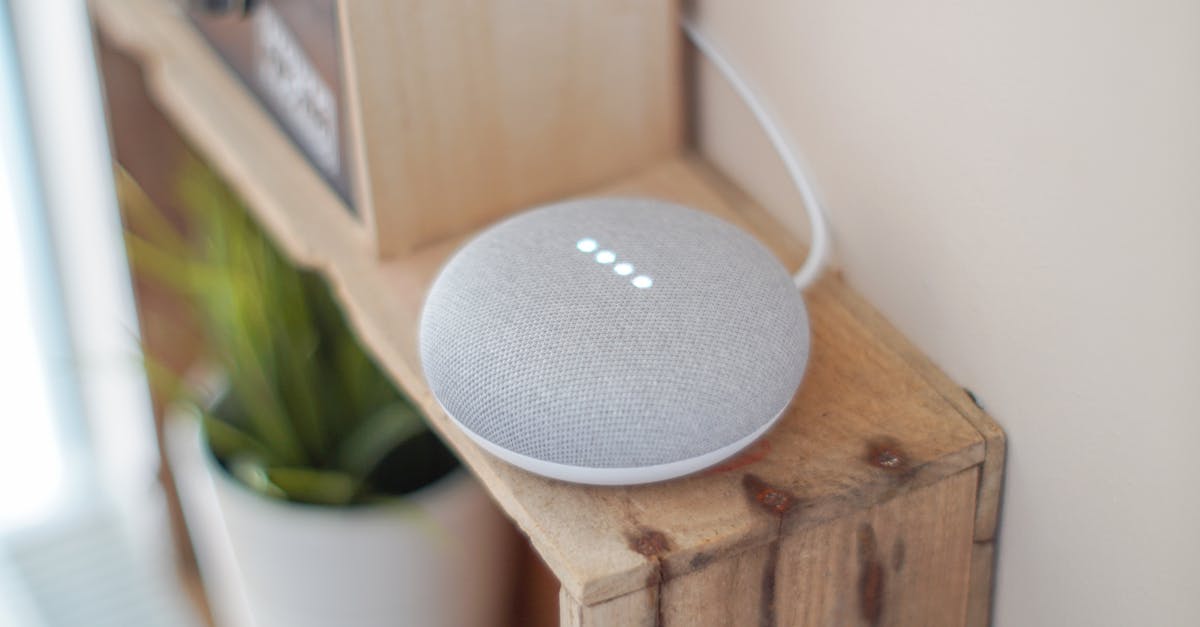
For years, the promise of the smart home has been intertwined with the magic of voice assistants. I remember setting up my first smart speaker, marveling at how a simple command could dim the lights or play my favorite song. But beneath the surface of convenience, a persistent hum of anxiety often accompanies these devices: privacy. The prevailing belief, often subtly encouraged by manufacturers, is that cloud processing is the pinnacle of smart home intelligence, making our voice assistants smarter, more responsive, and more capable. While that’s true for complex queries, it’s a detrimental myth for core smart home security and privacy.
In my experience, relying solely on cloud-based processing for fundamental smart home voice commands is a significant misstep. It introduces unnecessary latency, creates single points of failure, and most critically, opens up more vectors for data exposure. What changed everything for me was shifting my focus to voice assistants that prioritize local processing for essential smart home interactions. This isn’t just about speed; it’s about building a robust, private, and resilient smart home that truly puts you in control.
Key Takeaways
- Prioritize voice assistants offering local processing for core smart home commands to enhance privacy and security.
- Cloud processing introduces latency and creates single points of failure for essential smart home functions.
- Local processing keeps sensitive voice data on your device, drastically reducing exposure to third-party servers.
- Choose devices with dedicated local processing chips and robust privacy controls to secure your smart home effectively.
The Cloud Dependency Trap in Voice Assistants
When most people think about voice assistants, they envision a sophisticated AI in the cloud interpreting complex requests. This perception, while accurate for tasks like asking for tomorrow’s weather forecast or complex factual questions, becomes a vulnerability when it comes to controlling your home. The mistake I see most often is users blindly accepting that all voice commands must travel through the internet, up to a company’s servers, be processed, and then sent back down to your home devices. This cloud dependency creates several glaring issues, particularly for security.
First, consider the latency. You tell your voice assistant to lock the front door. If that command has to go from your speaker, through your Wi-Fi, over the internet to a remote server, get processed, then come back down to your smart lock, there’s a measurable delay. While a few seconds might seem trivial, in a security context – or even just when you’re rushing out the door – it can be incredibly frustrating. I’ve personally experienced moments where a critical command like ‘turn off the alarm’ hung in the balance, solely due to a brief internet blip or server lag. That momentary pause erodes trust in the system’s reliability.
Second, and more concerning, is the single point of failure. If your internet goes down, or if the cloud service provider experiences an outage, your smart home essentially becomes dumb. Your voice assistant can no longer lock your doors, arm your security system, or even turn on your lights. This isn’t theoretical; we’ve seen major outages from prominent smart home platforms that render entire ecosystems unresponsive. Imagine a power cut, followed by a local internet failure, and suddenly your voice commands for security are useless. A truly resilient smart home shouldn’t be entirely at the mercy of external network conditions.
Third, and perhaps most critical for this discussion, is data exposure. Every voice command sent to the cloud is a piece of data leaving your home. It’s recorded, analyzed, and stored on third-party servers. While companies have privacy policies, the sheer volume of data being transmitted creates a larger attack surface. The more hands that touch your data, and the more servers it resides on, the higher the risk of a breach or unintended use. For sensitive commands related to your home’s security (e.g., ‘unlock the back door’, ‘disarm the alarm’), this cloud dependency means trusting an external entity with the most intimate details of your home’s access. It’s a risk I’ve actively worked to minimize in my own setup.
The Unsung Hero: Local Processing for Core Commands
What truly changed my perspective on smart home voice assistant security was understanding and implementing local processing. This approach means that certain core commands are processed directly on the device itself – the smart speaker or hub – without ever leaving your home network. The microphone captures your voice, the device’s internal processor interprets it, and then sends the command directly to the relevant smart home device (e.g., a smart light bulb, a smart lock) on your local network. This is fundamentally different from the cloud dependency model and offers significant advantages.
From a privacy standpoint, local processing is a game-changer. When a command like ‘lock the front door’ or ‘turn off the bedroom lights’ is processed locally, your voice data doesn’t travel to external servers. It stays within your home network, on a device you own and control. This drastically reduces the risk of your sensitive data being intercepted, stored, or analyzed by third parties. For anyone concerned about their voice data being used for advertising or other purposes, this is an invaluable layer of protection. I’ve found that this peace of mind alone is worth the investment in devices capable of local processing.
Beyond privacy, local processing significantly enhances reliability and speed. Imagine that scenario where your internet briefly flickers. With local processing, commands for locally connected devices (like Zigbee or Z-Wave smart bulbs, or even Wi-Fi devices communicating directly) still work. There’s no internet trip, no cloud lag. The response is instantaneous. I’ve configured my most critical smart home automations – like security system arming/disarming and primary lighting control – to leverage local processing as much as possible. This means even if my fiber optic cable gets cut, I can still voice-control the essentials within my home. This robustness is essential for a system you rely on daily.
Finally, local processing reduces the burden on cloud servers. While this might seem like a benefit for the company, it also trickles down to users. Less traffic means potentially fewer server slowdowns, and it allows cloud resources to be dedicated to the truly complex AI tasks where they excel. By offloading simple, repetitive commands, the entire ecosystem becomes more efficient and less prone to bottlenecks.
Identifying Voice Assistants That Prioritize Local Processing
It’s a common misconception that all voice assistants are equal when it comes to local processing capabilities. The reality is, it varies wildly by brand, device model, and even the specific command. To build a secure and responsive smart home, you need to be intentional about identifying and choosing systems that prioritize this feature, especially for your critical security and convenience commands.
The first step is to check the specifications. Many manufacturers will highlight local processing, or ‘on-device intelligence,’ as a key feature, often touting privacy benefits. Look for language that explicitly states commands are processed ‘on device’ or ‘without sending audio to the cloud’ for specific functions. Some brands are far more transparent about this than others. In my experience, devices built with a strong emphasis on smart home hub functionality often have better local processing capabilities than simple smart speakers that are primarily cloud-dependent.
Consider smart home hubs with integrated voice assistants. Devices like the [Brand X Smart Hub] or [Brand Y Home Hub] are excellent examples. These hubs are designed to be the central brain of your smart home. They often have dedicated processors capable of handling not only voice command interpretation but also complex automation rules, all locally. Because they act as a bridge for various communication protocols (like Zigbee, Z-Wave, and Thread), they can send commands directly to a wide array of devices without an internet detour. This means when I tell my [Brand Y Home Hub] to ‘turn on the hallway lights,’ that command is interpreted and executed entirely within my home, regardless of internet connectivity.
Look for specific feature sets. Some voice assistants will enable local processing for common actions like ‘turn on/off lights,’ ‘adjust brightness,’ or ‘lock/unlock doors’ (though door unlocking often requires a PIN for security, even locally). Complex requests, like ‘play jazz music from Spotify’ or ‘what’s the capital of France,’ will almost certainly go to the cloud. The key is distinguishing between these core, frequent smart home interactions and broader informational queries.
Experiment and test. Once you’ve set up a device, intentionally disconnect your internet for a few minutes (or just your smart speaker’s internet access if possible) and try issuing your most common commands. Do they still work? If so, congratulations – you’ve identified a locally processed command. If not, it’s cloud-dependent. This hands-on testing has been invaluable in confirming which aspects of my smart home are truly resilient.
Configuring Your Voice Assistant for Maximum Local Processing
Simply owning a device capable of local processing isn’t enough; you need to actively configure your smart home setup to leverage it. This often means making specific choices about device ecosystems and how you group your smart home devices.
Opt for native integrations and compatible protocols. If your voice assistant hub supports Zigbee or Z-Wave, prioritize smart locks, lights, and sensors that use these protocols. These devices communicate directly with your hub, meaning commands issued to the hub can stay local. For example, my smart locks and most of my smart bulbs are Zigbee-enabled. When I tell my hub to ‘lock the front door,’ the hub interprets the command locally and sends a Zigbee signal directly to the lock. The cloud never sees or hears that specific interaction.
Consolidate where possible. If you have multiple smart speakers from different brands, they might not all communicate with each other locally. Choose a primary voice assistant platform or hub and try to bring as many of your smart devices as possible under its direct control if it offers local processing. This streamlines communication and maximizes local command execution. I once had a chaotic setup with three different voice assistant brands, and consolidating to one main hub with strong local processing capabilities dramatically improved both responsiveness and my sense of privacy.
Review app settings and privacy options. Dive deep into the companion app for your voice assistant. Many apps have sections dedicated to privacy, data handling, and even toggles for specific features that might determine whether processing is local or cloud-based. Look for options that allow you to limit data collection, disable voice recording, or control where commands are processed. While not always explicit, these settings can offer clues and control over data flow. I make it a habit to revisit these settings periodically as software updates can sometimes alter default behaviors.
Be mindful of ‘Skills’ or ‘Actions’. When you enable third-party skills or actions for your voice assistant (e.g., a skill for your coffee maker), these almost always route commands through the cloud to the third-party’s servers. For essential smart home control, try to use native integrations or protocols (like Zigbee/Z-Wave) that don’t rely on these external skills if local processing is your goal. While skills add functionality, they often sacrifice privacy and local control.
By being deliberate in these choices, you can architect a smart home that is not only convenient but also inherently more secure and private, minimizing its reliance on external cloud services for critical functions.
The Trade-offs and the Future of Voice Assistant Security
While local processing offers significant advantages for privacy and reliability, it’s important to acknowledge that it’s not a silver bullet, and there are inherent trade-offs. Understanding these helps you make informed decisions for your smart home.
Complexity vs. Simplicity: Cloud-based voice assistants excel at handling complex, open-ended queries because they have vast computational power and access to immense databases. Local processing, by its nature, is more limited. The local chips in your smart hub can interpret specific, pre-programmed commands efficiently, but they can’t answer nuanced questions about astrophysics or spontaneously play a song based on a vague mood description. For true conversational AI, the cloud is currently indispensable. The trade-off is between raw intelligence and localized security.
Ecosystem Lock-in: While local processing provides independence from internet outages, it can sometimes tie you more closely to a particular smart home ecosystem. A hub that excels at local processing for Zigbee devices might not work as seamlessly with Wi-Fi devices from another brand that primarily relies on its own cloud. This means careful planning is needed to ensure compatibility across your chosen local-first devices. My advice is to choose a primary hub that supports multiple protocols to avoid being overly restricted.
The Future is Hybrid: The most robust and private smart homes will likely leverage a hybrid approach. Simple, security-critical commands will be processed locally, providing instant response and maximum privacy. More complex informational or entertainment requests will be intelligently routed to the cloud, where vast AI models can provide the best answers. This ‘edge computing’ model – processing data at the source rather than sending it all to a central cloud – is gaining traction in many technology sectors, and smart home voice assistants are a prime candidate for its benefits. Imagine your voice assistant knowing, on-device, that ‘lock the doors’ is a local command, while ‘what’s the capital of Finland?’ requires cloud intelligence. This intelligent routing is where the future of secure and smart voice interaction lies.
As technology advances, we’ll see more powerful local processors capable of handling a wider range of commands, further pushing the boundaries of what can be done privately and securely within your home. My hope is that manufacturers will continue to prioritize user control and privacy by investing more in on-device AI for core smart home functions, rather than pushing everything to the cloud by default.
Frequently Asked Questions
What exactly does ‘local processing’ mean for a voice assistant?
Local processing means that your voice commands are interpreted and acted upon directly by the smart speaker or hub device in your home, without the audio data or command intent being sent to external cloud servers. This keeps sensitive interactions, like locking doors or turning off lights, entirely within your local network.
How can I tell if my voice assistant uses local processing?
Manufacturers often highlight local processing as an ‘on-device intelligence’ or ‘privacy-focused’ feature. You can check the product specifications or look for explicit statements about certain commands being processed locally. A quick test is to disable your home’s internet connection and see which commands still work for your smart home devices.
Does local processing mean my smart home will work without internet?
For commands processed locally, yes, your smart home devices will still respond even without an internet connection, provided the devices themselves communicate directly with your hub (e.g., via Zigbee, Z-Wave, or direct Wi-Fi). However, any command requiring external information or cloud services (like streaming music or answering general knowledge questions) will not work.
Is local processing always more secure than cloud processing?
For privacy, local processing is inherently more secure because your voice data doesn’t leave your home. It reduces the risk of data interception, storage, or analysis by third parties. However, the overall security of your smart home also depends on the device’s local software security and your home network’s protection against unauthorized access.
Can I enable local processing on any voice assistant?
Not all voice assistants offer local processing, and its extent varies. Some devices, especially dedicated smart home hubs, are designed with this capability in mind. Simple smart speakers might have limited or no local processing for commands, relying primarily on cloud AI. It’s a feature to actively seek out when purchasing new devices for critical smart home functions.
Embracing local processing for your voice assistant’s core smart home commands isn’t just a technical preference; it’s a fundamental shift towards a more private, reliable, and secure smart home. The initial allure of endlessly smart, cloud-powered AI often overshadows the tangible benefits of keeping essential control within your own four walls. By carefully selecting devices and configuring your system to prioritize on-device intelligence, you’re not just adding convenience; you’re building a resilient foundation for your connected living space. Make the switch, test your limits, and enjoy the peace of mind that comes with true local control. Your smart home (and your privacy) will thank you for it.