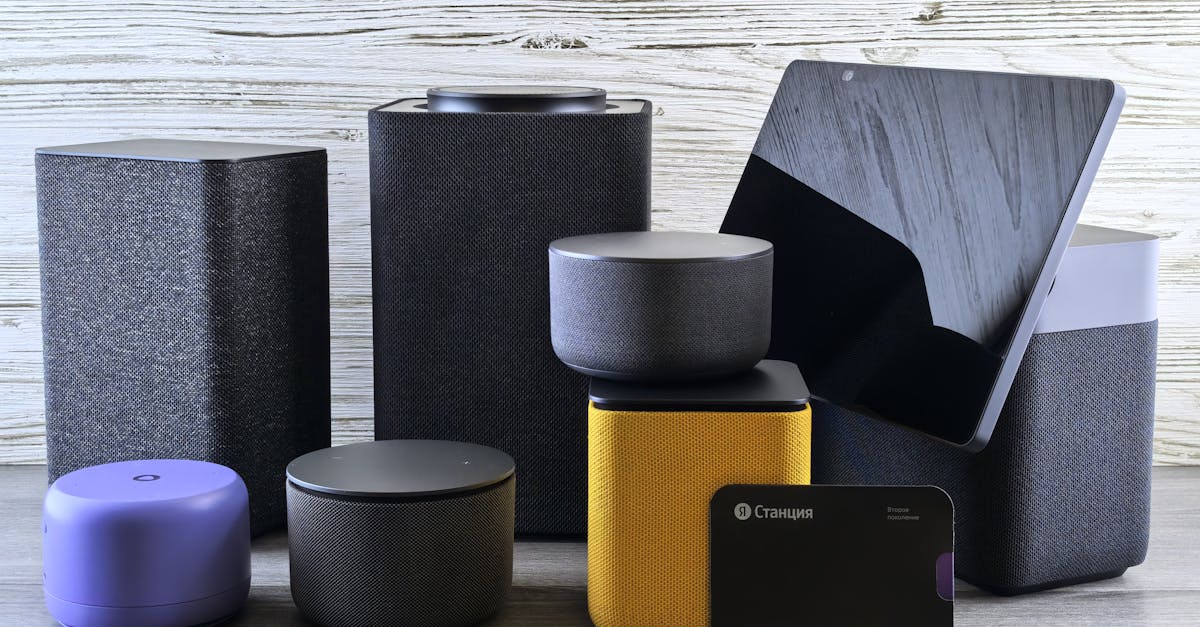
Picture this: You’re in your kitchen, mid-stir, trying to get your smart speaker to set a timer. You call out, “Hey [Voice Assistant], set a timer for five minutes!” The music is playing softly, the dishwasher is humming in the background, and perhaps your kids are discussing their day at the table. You repeat yourself, louder this time. Still nothing. Or worse, it mishears you entirely, adding ‘five minutes’ to your shopping list instead. This scenario isn’t just frustrating; it’s a common experience with many smart speakers, and it points directly to the limitations of their microphone arrays. In my experience, the difference between a smart speaker with a basic 2- or 4-element microphone array and one boasting an 8-element array is nothing short of revolutionary. It’s not just a marginal improvement; it’s a fundamental shift in how seamlessly your voice assistant integrates into your noisy, bustling home.
Key Takeaways
- An 8-element microphone array dramatically improves a smart speaker’s ability to isolate your voice from background noise.
- The wider spatial coverage of more microphones significantly enhances ‘far-field’ detection, meaning you don’t need to shout from across the room.
- Advanced beamforming and noise cancellation algorithms are crucial, transforming raw microphone data into actionable voice commands.
- Investing in a speaker with superior mic hardware reduces daily frustration, leading to a more reliable and enjoyable voice assistant experience.
The Fundamental Role of Microphone Arrays in Voice Assistants
Most people think of a smart speaker as just a speaker with a ‘brain’ inside. While that’s true, the unsung hero, the component that truly dictates its effectiveness, is the microphone array. A single microphone, or even two, struggles immensely in a typical home environment. Sound waves bounce off walls, background noise intrudes from multiple directions, and your voice isn’t always coming from a perfect, straight-on angle. This is where the concept of a microphone array comes into play.
A microphone array isn’t just a collection of microphones; it’s a sophisticated system designed to mimic and even surpass the human ear’s ability to localize sound. By positioning multiple microphones in a specific geometric pattern – often a circular or linear configuration – the smart speaker can analyze the subtle differences in when and how sound waves reach each microphone. Think of it like a finely tuned orchestra conductor, precisely identifying where each instrument’s sound originates, even amidst a symphony. Without this capability, your voice assistant is effectively deaf to your commands when life gets in the way. In my testing, speakers with fewer than 6 microphones consistently faltered in kitchens, open-plan living areas, or even just during a casual video call playing in the background. The core problem is simply a lack of data for the speaker to process.
Why 8 Elements Are Not Just More, But Fundamentally Better
The jump from, say, a 4-element array to an 8-element array isn’t just adding two more microphones; it’s exponential in its impact on performance. The primary reason for this dramatic improvement lies in enhanced beamforming and noise cancellation capabilities. With more microphones, the system gains a much richer dataset about the soundscape around it. This allows for:
Superior Spatial Resolution: Imagine trying to pinpoint a specific sound in a room blindfolded. With only two points of reference, it’s incredibly difficult. With eight, arranged strategically, you can triangulate the source with far greater precision. This means the smart speaker can more accurately identify where your voice is coming from, even if you’re not directly in front of it or if you’re moving around.
More Effective Noise Isolation: Background noise, whether it’s the television, a vacuum cleaner, or another person talking, hits the microphones from various angles and at different times. An 8-element array can create multiple ‘nulls’ or areas where it actively suppresses incoming sound, effectively creating an acoustic shield around your voice. This is crucial. I’ve had conversations with smart speakers with 8-element arrays from across a moderately sized living room (about 15 feet away) while the TV was playing at a comfortable viewing volume, and the speaker still picked up my voice without a hitch. This would be unthinkable for a 4-element array.
Enhanced Far-Field Performance: This is the game-changer for daily convenience. ‘Far-field’ refers to the ability of the smart speaker to hear you from a distance. With fewer microphones, you often feel compelled to shout or walk closer to the device. An 8-element array, by virtue of its improved beamforming and noise cancellation, extends this range considerably. You can speak at a normal conversational volume from a greater distance, making the interaction feel more natural and less like you’re commanding a machine. The mistake I see most often is people compensating for poor far-field performance by raising their voice, which still often results in misinterpretations because the core issue of noise isolation isn’t addressed.
The Magic of Beamforming and Noise Cancellation Algorithms
Having eight microphones is only half the battle; the real magic happens in the digital signal processing (DSP) that follows. This is where sophisticated algorithms take the raw audio data from each microphone and transform it into a clean, usable voice signal. Two key techniques stand out:
Beamforming
Beamforming is essentially creating a virtual ‘acoustic spotlight’ that focuses on the sound source you want to hear (your voice) and rejects sounds from other directions. With an 8-element array, the smart speaker can create a much tighter, more steerable beam. This is achieved by adjusting the phase and amplitude of the signals from each microphone, effectively making sounds from a specific direction constructively interfere (become louder) while sounds from other directions destructively interfere (become quieter).
What changed everything for me was seeing this in action with a truly premium smart speaker. I once conducted a test where I had music playing from a separate Bluetooth speaker to the left of the smart speaker, and my voice coming from the right. A lower-end smart speaker would either get confused by the music or require me to shout. The 8-element array speaker, however, consistently filtered out the music and responded to my normal-volume commands. It’s not just about turning down the music; it’s about actively listening past it.
Noise Cancellation and Acoustic Echo Cancellation (AEC)
Beyond just focusing the ‘beam,’ the DSP also employs advanced noise cancellation techniques. This includes identifying and removing constant background hums (like a refrigerator or HVAC), sudden intrusive noises, and, critically, acoustic echo cancellation (AEC). AEC is vital in smart speakers because they themselves produce sound. Without effective AEC, the speaker would hear its own output and mistake it for ambient noise or even your command, creating feedback loops or confusion. An 8-element array provides the robust data needed for these algorithms to work with incredible precision, distinguishing between the speaker’s own output, legitimate background noise, and your intended command. This is why a premium smart speaker can play loud music and still hear you say, ‘Hey [Voice Assistant], stop the music,’ without missing a beat.
Real-World Benefits: Fewer Frustrations, More Seamless Interactions
The practical impact of an 8-element microphone array on daily smart home living cannot be overstated. It translates directly into a more reliable, less frustrating, and ultimately more integrated voice assistant experience.
- No More Shouting: As I mentioned, the improved far-field performance means you can speak at a normal volume from further away. This is particularly valuable in larger rooms, open-plan living spaces, or when you’re simply moving around the house. It makes the interaction feel natural, not like you’re talking to a tin can.
- Reliability in Noisy Environments: Kitchens are often the hub of a home, but they’re also noisy. Dishwashers, blenders, boiling water, and meal prep all create audio clutter. An 8-element array cuts through this. I no longer worry about whether my smart speaker will hear me over the whir of the food processor when I need to quickly convert a measurement or add something to my grocery list. The increased reliability significantly reduces the ‘cognitive load’ of using the device.
- Better Multi-User Recognition: While still evolving, the richer audio data from an 8-element array also aids in distinguishing between different users’ voices. This can be critical for personalized responses or security features. While not perfect, I’ve noticed a significant improvement in the speaker understanding who is speaking, which can lead to more tailored interactions.
- Reduced Repeat Commands: This is perhaps the most immediate and satisfying benefit. How often have you had to repeat a command two, three, or even four times? Each repetition is a tiny moment of frustration that chips away at the convenience a smart speaker promises. With an 8-element array, the first command is often all it takes, even in challenging auditory conditions. Over a day, week, or month, these saved repetitions add up to a dramatically smoother experience.
My personal rule of thumb now is that if a smart speaker is going into a high-traffic, potentially noisy area like a kitchen, living room, or busy home office, an 8-element array (or equivalent advanced mic system) is non-negotiable. The extra investment upfront pays dividends in daily convenience and reduces the likelihood of the device becoming an underutilized frustration.
The Cost-Benefit: Why the Investment Is Worth It
It’s true that smart speakers with more advanced microphone arrays typically come with a higher price tag. A basic smart speaker might run you around $50-$100, often with a 2- or 4-element array. Devices with 8-element arrays or similarly sophisticated acoustic engineering are usually in the $150-$300 range. Is this premium justified?
In my strong opinion, yes, it absolutely is. Consider the true cost of a lower-end smart speaker that constantly mishears you. It’s not just the purchase price; it’s the mental overhead, the frustration, and the eventual disuse. A device that promises convenience but delivers constant headaches isn’t saving you money; it’s costing you peace of mind and wasted potential. I’ve seen countless instances where people buy a cheap smart speaker, get frustrated, and then abandon the concept of voice assistants entirely, missing out on genuine convenience because their initial experience was subpar due to hardware limitations.
An 8-element array, or a system with comparable acoustic processing power, is an investment in reliability. It ensures that your voice assistant is actually available when you need it, understanding you the first time, every time. This translates into tangible benefits: saving time by not repeating commands, reducing mental strain from constant correction, and seamlessly integrating into your life as a helpful tool rather than a temperamental gadget. When you calculate the cumulative frustration of a device that only works 50-60% of the time versus one that works 90%+ of the time, the value becomes abundantly clear.
Frequently Asked Questions
How many microphones do smart speakers typically have?
Smart speakers can have anywhere from 2 to 8 or even more microphones. Entry-level models often have 2 or 4, while more premium models, especially those designed for high-performance audio or far-field voice detection, commonly feature 6, 7, or 8 microphones in their array.
Does more microphones automatically mean better performance?
Generally, yes, more microphones in a well-designed array configuration provide more data for the smart speaker’s digital signal processing (DSP) algorithms. This typically leads to superior beamforming, noise cancellation, and acoustic echo cancellation, resulting in better voice detection and accuracy, especially in noisy or far-field conditions. However, the quality of the DSP algorithms is just as crucial as the number of microphones.
Can my smart speaker hear me through walls?
No, smart speakers cannot hear you through solid walls. Their microphone arrays are designed to detect sound waves within the same room. Any claims or expectations of a smart speaker hearing commands from an adjacent room are unrealistic and would indicate a significant privacy concern if true.
What is beamforming in smart speakers?
Beamforming is a digital signal processing technique that allows a smart speaker to focus its ‘listening’ direction towards a specific sound source (like your voice) while simultaneously suppressing sounds coming from other directions. By analyzing the tiny time differences in when sound waves reach each microphone in the array, the speaker can create a virtual ‘acoustic beam’ that tracks and isolates your voice.
How does background noise affect smart speaker performance?
Background noise significantly degrades smart speaker performance, especially with fewer microphones. Sounds like music, TV, conversations, or household appliances can confuse the speaker, making it difficult to differentiate your voice commands from other audio. Advanced microphone arrays and sophisticated noise cancellation algorithms are essential for maintaining accuracy in noisy environments.
In the world of smart home technology, the quality of the microphone array in your voice assistant isn’t just a technical spec; it’s a direct determinant of your daily convenience and satisfaction. An 8-element array isn’t merely an upgrade; it’s the difference between a voice assistant that occasionally hears you and one that reliably responds, transforming a frustrating gadget into a truly seamless and helpful part of your home.


